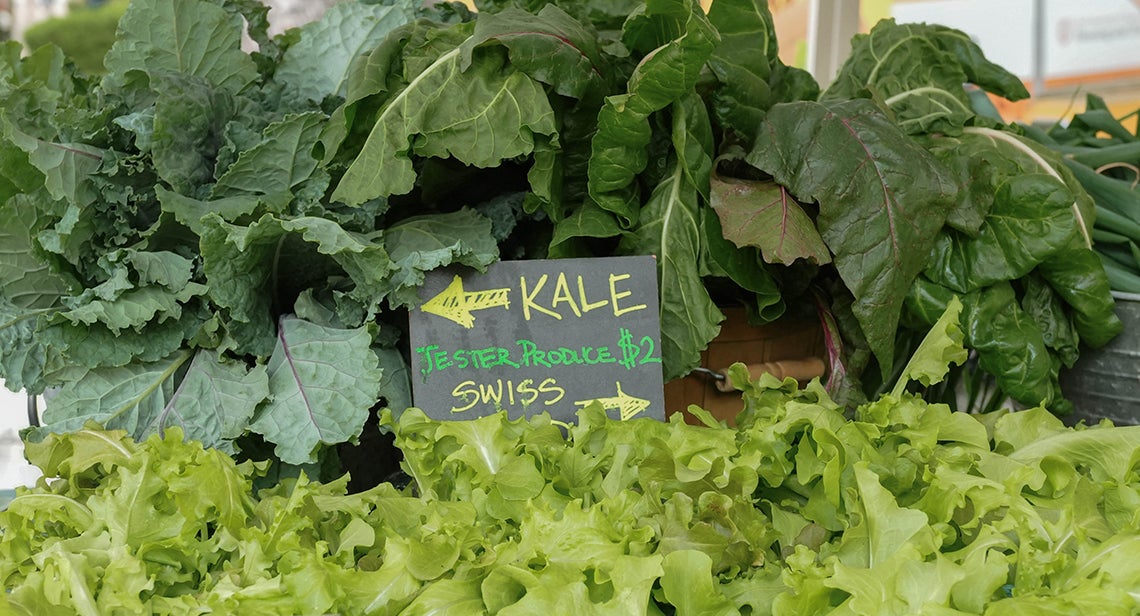
Our campus gardens are living classrooms where students can connect with sustainable food systems and the natural environment. Maintained by students and our garden program coordinator, our gardens grow food in an environmentally conscious way and serve to teach the campus community about food origins, garden management and environmentalism. Produce grown in UT Farm Stand gardens helps support the campus community by providing fresh ingredients for our markets, UHD kitchens and the UT Outpost food pantry.
Explore the seven urban gardens on campus that we support:
Compost Garden
The Compost Garden showcases four distinct systems for nutrient-cycling and waste diversion, serving as an educational resource for learning tours and workshops.
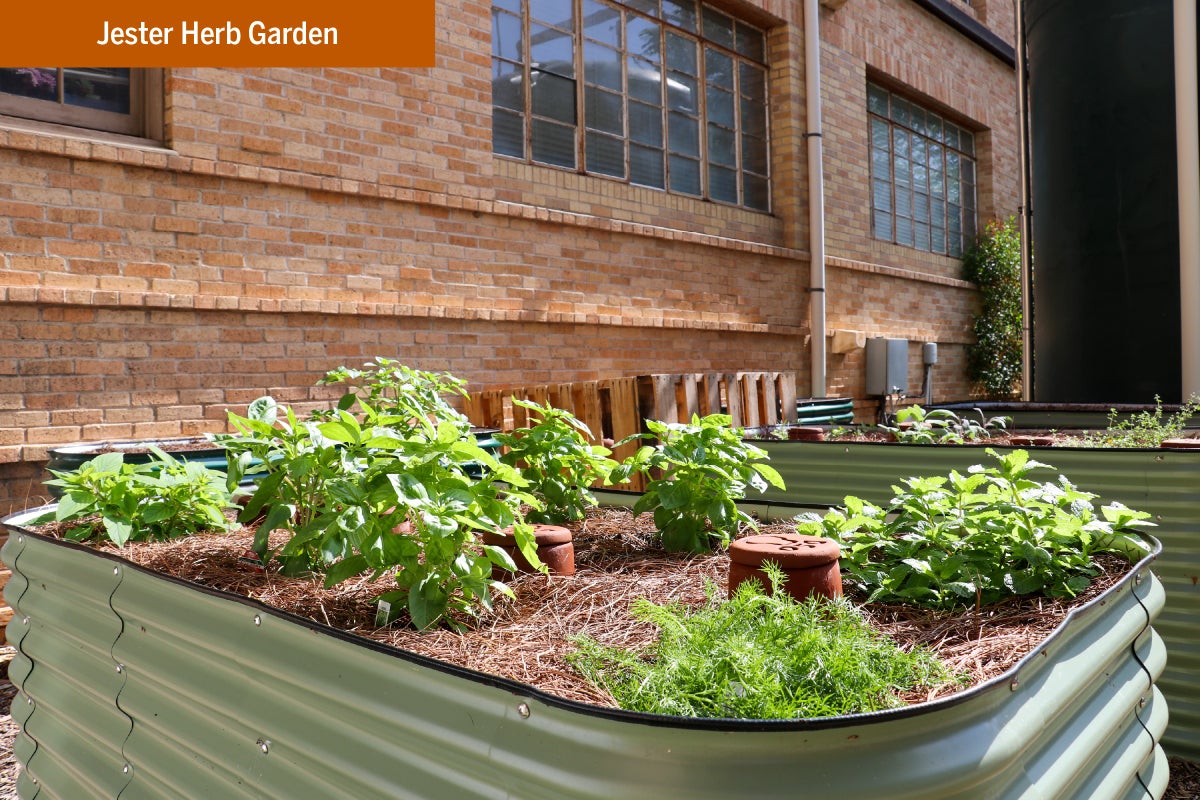
Jester Herb Garden
The Jester Herb Garden grows herbs for teas and culinary uses while also providing seasonal blooms for beautiful cut flower arrangements.
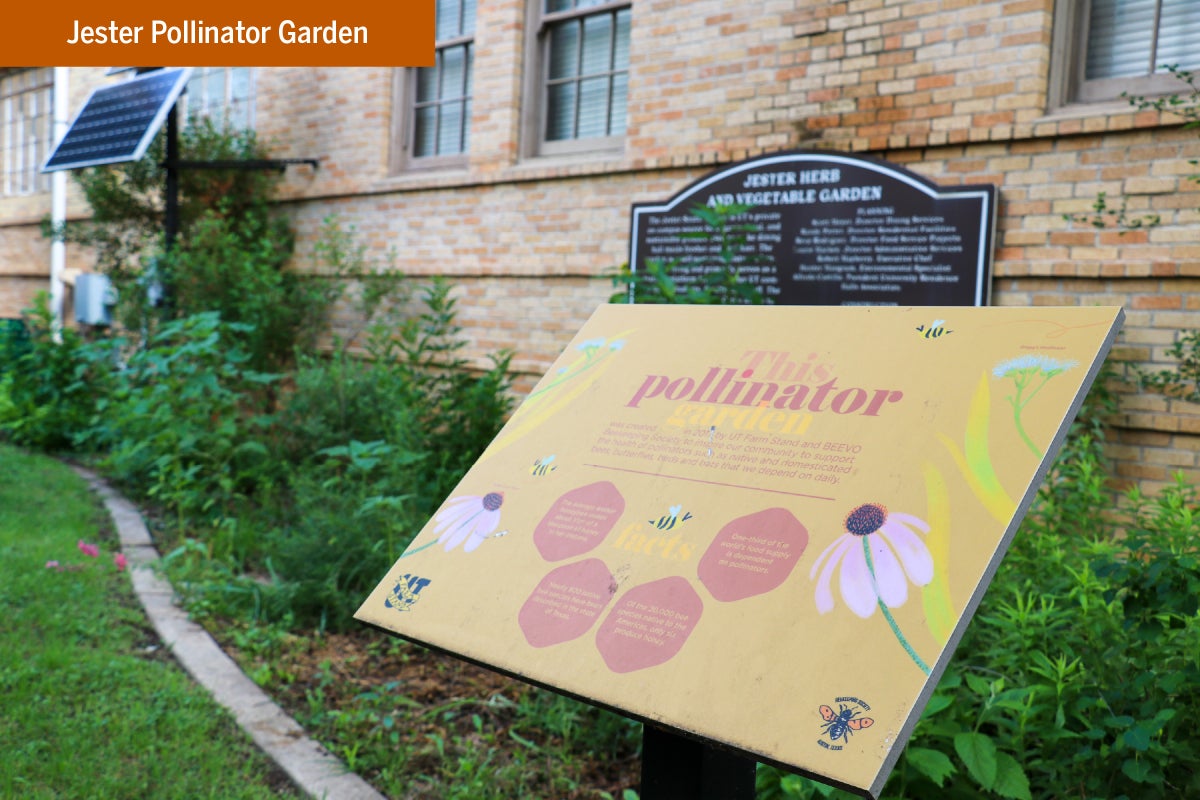
Jester Pollinator Garden
The Jester Pollinator Garden provides a thriving habitat for pollinators through a variety of native plants, herbs and seasonal flowers designed for low-maintenance growth.
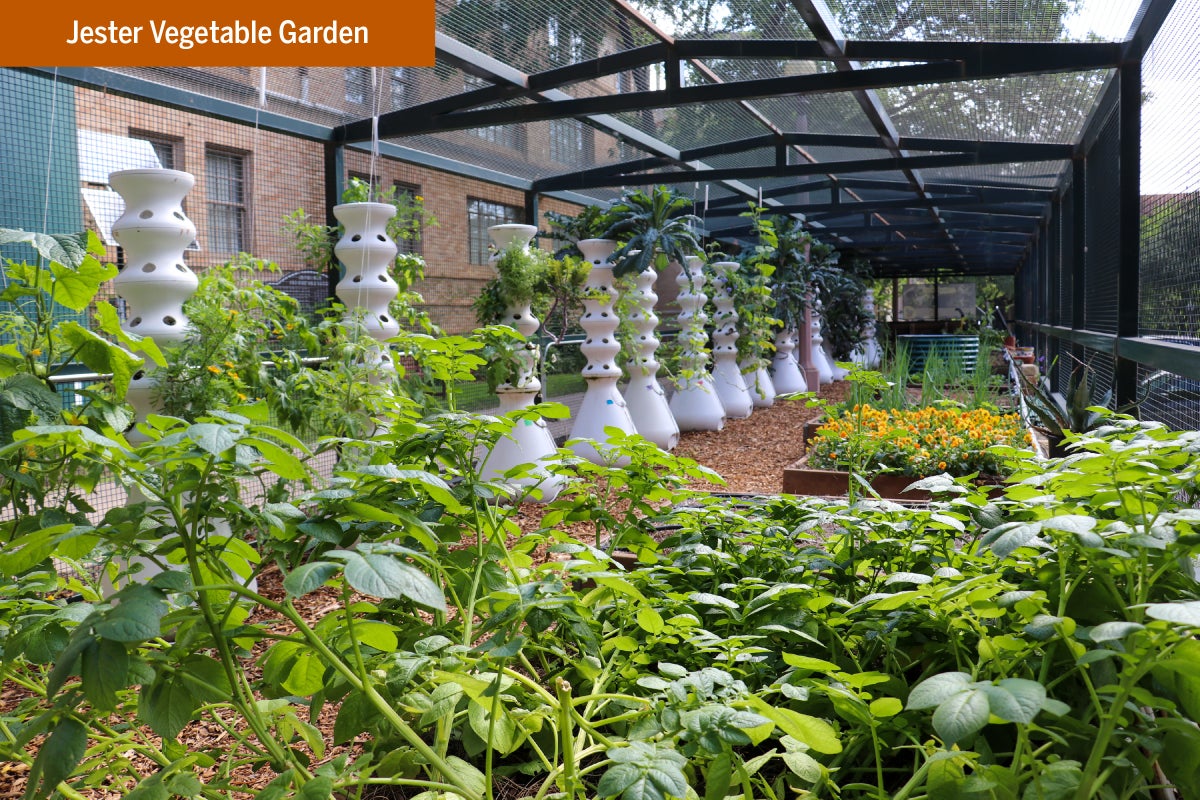
Jester Vegetable Garden
The Jester Vegetable Garden is home to 12 raised beds and 20 Lettuce Grow hydroponic towers that provide sustainably grown produce for UT Farm Stand markets, UT Outpost and collaborations with UHD kitchens. Each term, we host our Pick Local event that invites the campus community to harvest, prepare and enjoy a fresh salad grown directly from the garden.
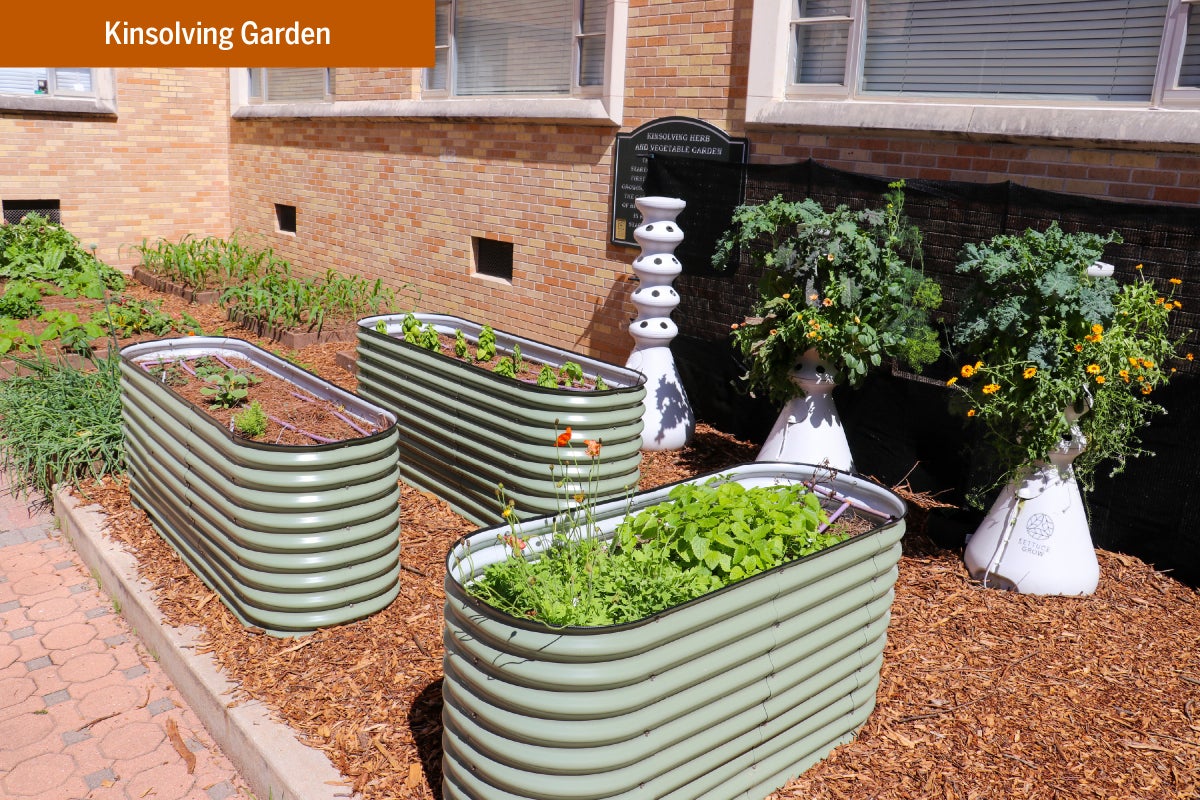
Kinsolving Garden
Kinsolving Garden features five Lettuce Grow hydroponic towers alongside a variety of container-gardening demonstration planters. Two of the towers were purchased by UT Outpost to directly support their on-campus food pantry.
Mindfulness Garden
The Mindfulness Garden connects sustainable gardening with mental wellness through a collaboration with the Longhorn Wellness Center, creating a space for reflection, connection and community.
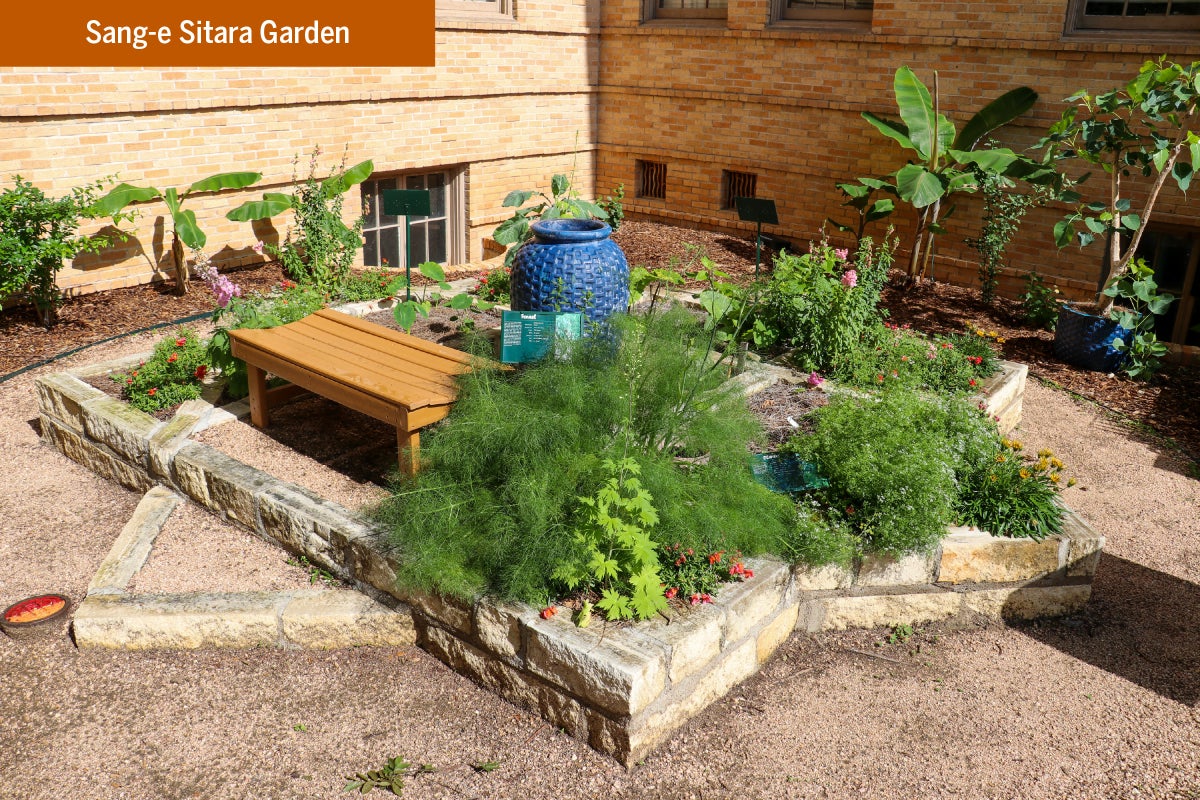
Sang-e Sitara Garden
Created in partnership with the South Asia Institute, the Sang-e Sitara Garden highlights the cultural significance of plants grown in South Asia, celebrating the connections between food, heritage, and the global histories of the fruits, vegetables, and herbs common to South Asian foodways.
If you’re interested in joining work days in our gardens, visit our volunteer webpage.
Photo Gallery